🦊Now open for fall enrollment-contact us for more information! 🌲

Growing Minds Outdoors: A Parent’s Guide to Nature-Based Learning in Early Childhood
“Look, Mama! A worm!” Knees muddy, hands full of soil, and eyes lit up with wonder—your child has just discovered a whole world beneath their feet. What may seem like simple outdoor play is actually a powerful learning experience. Every leaf they examine, every stick they stack, and every bug they observe is part of a deeper lesson in curiosity, resilience, and connection.
5/8/20243 min read
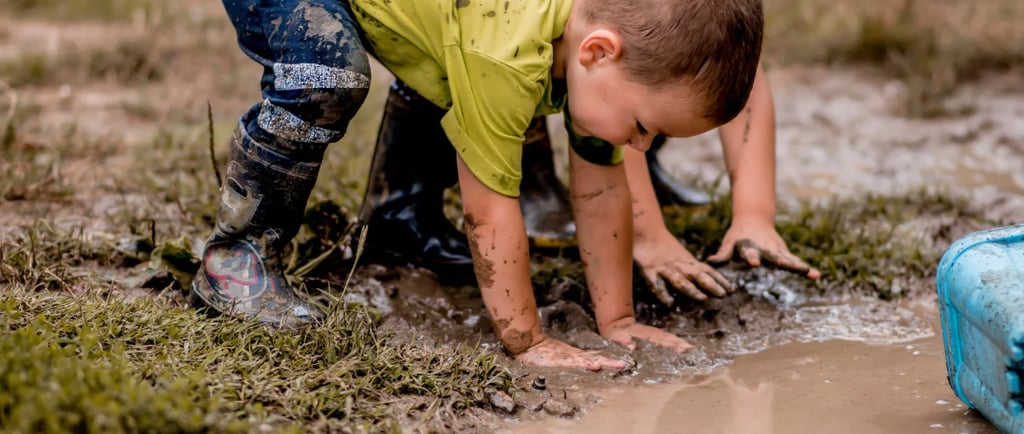
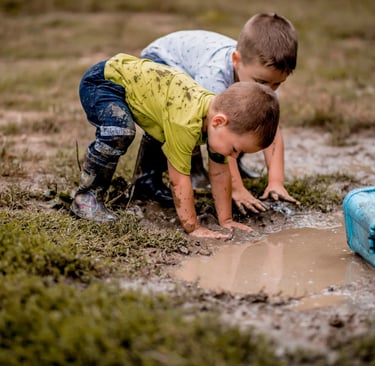
Nature-based learning is an educational approach that uses the natural environment as both the classroom and the teacher. Instead of relying solely on worksheets and indoor routines, children learn by exploring outdoor spaces—through play, observation, movement, and meaningful interaction with the world around them.
This method isn’t just “playing outside.” It’s intentional, child-led, and rooted in the belief that nature supports all areas of early development—cognitive, emotional, social, and physical.
One well-known model of nature-based education is the Forest School approach, which originated in Scandinavia and has gained popularity around the world. In a Forest School setting, children spend regular, extended time outdoors—often in wooded areas—engaging in activities like building shelters, climbing trees, making mud pies, or learning how to use simple tools under supervision. The focus isn’t on worksheets or tests—it’s on developing confidence, independence, creativity, and problem-solving skills through real-world experiences.
What is Nature Based Learning?
Why is matters…
The benefits of nature-based learning go far beyond fresh air and exercise. When children spend time outdoors in meaningful ways, they grow in ways that are hard to replicate in a traditional classroom.
Physical Development
Climbing, balancing on logs, jumping over puddles—these activities strengthen children’s muscles, improve coordination, and boost overall health. Unlike smooth indoor floors, nature offers uneven surfaces and natural obstacles that help kids develop better balance and motor skills.
Cognitive Growth
Nature is full of open-ended questions and discoveries. Why do leaves fall? What lives under that rock? Outdoor exploration encourages critical thinking, problem-solving, and creativity. Instead of memorizing facts, children engage with real-world puzzles and learn through direct experience.
Emotional and Mental Wellbeing
Time in nature has been shown to reduce stress and anxiety in children. It gives them space to decompress, daydream, and connect with themselves. The natural world moves at a slower pace, helping children regulate their emotions and build resilience.
Social Skills and Cooperation
Whether they’re building a fort together or taking turns with a magnifying glass, children learn valuable social skills outside. Nature encourages collaboration, communication, and empathy. There are no fixed toys or rules—just shared goals and collective creativity.
A Foundation for Lifelong Learning
Nature-based learning builds skills that last a lifetime: independence, observation, persistence, and curiosity. These are the building blocks not just of academic success, but of engaged, adaptable learners in any setting.Write your text here...
What the research says: Nature helps children thrive
Parents often notice how calm, curious, and joyful their kids become after time outdoors. As it turns out, science backs that up. Researchers across the world have found that spending time in nature supports children’s growth in powerful and lasting ways.
Here’s what the research says:
Nature Helps Kids Focus and Learn
Children who spend more time in natural settings tend to show better attention, memory, and self-control—skills that help them learn and succeed in school.
A review of over 100 studies found that:
“Children who spend more time in natural environments demonstrate improved attention, concentration, and self-discipline.”
(Gill, 2014 — Children, Youth and Environments)
📖 Read the study summary
Nature Supports Emotional Wellbeing and Social Growth
Being in nature helps children feel calmer and happier—and it encourages them to work together and build empathy.
Researcher and educator David Sobel explains:
“Regular contact with natural environments reduces stress, enhances mood, and builds empathy and cooperative behavior.”
(Sobel, 2004 — Place-Based Education)
📖 Read a great article from Sobel here
Outdoor Time Gets Kids Moving and Healthy
Unlike indoor environments, nature invites movement—running, jumping, climbing, digging—all of which are essential for growing bodies.
A 2021 review in Pediatrics found:
“Exposure to nature was consistently associated with increased physical activity and reduced sedentary behavior in children.”
(Fyfe-Johnson et al., 2021 — Pediatrics)
📖 Read the full study
Unstructured Play in Nature Builds the Whole Child
When children play freely outdoors, they’re not just having fun—they’re building important life skills.
A 2020 study in PLOS ONE said:
“Unstructured nature play provides diverse opportunities for holistic development—social, emotional, cognitive, and physical—particularly in early childhood.”
(Dankiw et al., 2020 — PLOS ONE)
📖 Explore the study
The takeaway? Time in nature isn’t just “nice to have”—it’s a powerful part of healthy childhood development. And it doesn’t require a forest or fancy equipment. Just a patch of green, a curious mind, and the freedom to explore.Write your text here...
“Play is the highest expression of human development, for it alone is the expression of what is in the child’s soul.”
-Friedrick Frobel
riverhillsforestschool@gmail.com
Contact Us at:
© 2026. All rights reserved.