🦊Now open for fall enrollment-contact us for more information! 🌲

Why Risky Play Is Safe — and Essential — for Your Child’s Development
In this post, we’ll explore what risky play really means (spoiler: it’s not as scary as it sounds), how we keep it safe, and why it’s one of the most powerful learning tools we can offer young children.
5/8/20243 min read
“Be careful!”
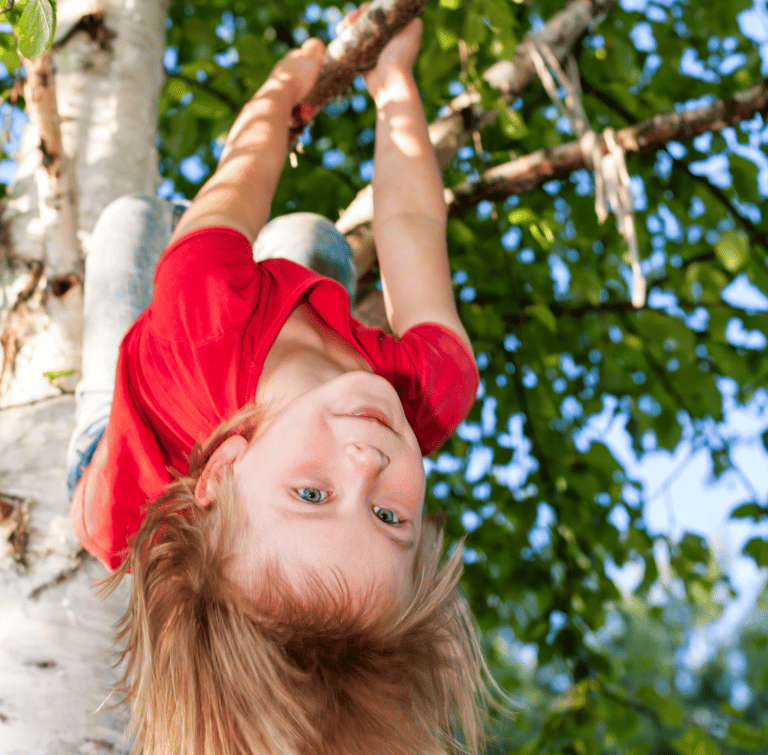
It’s one of the most common phrases we say as parents—especially when we see our child climbing a tree, balancing on a log, or holding a stick just a little too confidently. It’s only natural to want to protect them. But what if we told you that those very moments of uncertainty—those calculated risks—are some of the most important for their development?
At Forest School, we believe that risky play isn’t reckless—it’s essential. When children climb, balance, jump, and explore the unknown, they’re not just having fun. They’re building strength, confidence, and real-world decision-making skills that will stay with them for life.
In this post, we’ll explore what risky play really means (spoiler: it’s not as scary as it sounds), how we keep it safe, and why it’s one of the most powerful learning tools we can offer young children.
What Is Risky Play?
Risky play is any play that involves a challenge, uncertainty, or a chance to test limits—all within a safe and supportive environment. It might sound a little nerve-wracking at first, but for children, these experiences are exciting, empowering, and deeply educational.
At Forest School, risky play often looks like:
Climbing trees and learning how to judge safe heights
Balancing on fallen logs or uneven terrain
Using real tools like peelers or small saws with guidance
Playing near water or natural slopes
Rough-and-tumble play like rolling, jumping, or play-wrestling
It’s important to note: risky play is not the same as dangerous play. Dangerous play involves hazards—hidden or unmanaged threats. Risky play, on the other hand, is purposeful and supported. Adults observe carefully, assess each child’s readiness, and give just the right amount of guidance to keep learning safe, not sterile.
By facing small, manageable risks, children learn to:
Know their limits
Listen to their bodies
Make decisions under pressure
Bounce back from minor setbacks
It’s through these moments of uncertainty and discovery that children build the confidence to handle bigger challenges in life—with both courage and care.Write your text here...
Reframing Risk: What Parents Can Do
As parents, it’s natural to feel that protective instinct kick in when your child climbs a tree or picks up a stick. But part of supporting your child’s growth is learning to see risk not as a danger to avoid, but as a skill to develop.
When we step back (just a little), we give children room to learn how to judge situations, make decisions, and build confidence in their own abilities. And when they do stumble—or even fall—they learn that they can get back up again.
Shift the Question
Instead of asking,
“What if they get hurt?”
try asking,
“What will they learn from this?”
Here’s how you can support safe and meaningful risky play:
1. Observe Before Intervening
Take a deep breath and watch. Is your child focused? Are they aware of their surroundings? If so, they’re learning to assess risk for themselves.
2. Know the Difference Between Risk and Hazard
Risk: A log to balance on
Hazard: A slippery log near a sharp drop
At Forest School, we remove hazards—but we allow risk, because it teaches critical thinking.
3. Celebrate Effort, Not Just Success
Climbing halfway up a tree and deciding to come back down is just as valuable as reaching the top. They made a choice, listened to their body, and practiced self-regulation.
4. Talk About Risk with Your Child
After play, ask:
“How did that feel?”
“What did you notice about your body?”
“What would you try differently next time?”
These conversations help children process and reflect on their experiences.
Allowing your child to experience healthy risk doesn’t mean letting go completely—it means trusting them to learn, while staying nearby as their steady, supportive guide.
The Real Risk Is Not Letting Them Try
It’s easy to see why risky play can make adults uncomfortable. After all, we want to protect our children from harm. But the truth is, when we say no to every stick, every climb, or every leap, we’re not just keeping them safe—we may also be holding them back.
At Forest School, we believe that the biggest risk isn’t falling down—it’s never learning how to get back up.
Risky play gives children the chance to test their boundaries, solve problems, and build confidence—not in a pretend world, but in the real one. With the right guidance and environment, children learn not just how to stay safe, but how to be brave, thoughtful, and resilient.
So the next time your child scrambles up a tree or wobbles across a log, take a moment. Breathe. Watch. You might be witnessing something much bigger than play—you’re watching them grow.
“Play is the highest expression of human development, for it alone is the expression of what is in the child’s soul.”
-Friedrick Frobel
riverhillsforestschool@gmail.com
Contact Us at:
© 2026. All rights reserved.